

Did you know that approximately £60 million worth of watches were reported stolen in the UK during 2024 alone? For many collectors, the quiet satisfaction of owning a rare timepiece is often undercut by the persistent anxiety of keeping it safe. You likely suspect that a standard home insurance policy, with its restrictive single item limits typically capped between £1,500 and £2,500, is insufficient for a serious horological investment. This guide focuses on protecting the value of your watch collection through a dual-discipline strategy of financial indemnity and physical preservation.
You'll learn how to safeguard your assets through specialist UK insurance, rigorous valuation schedules, and professional-grade security. We provide a clear roadmap for professional valuations and explain how insurance-approved storage can provide total peace of mind. From understanding the "average clause" to selecting the correct Eurograde safe, this article ensures your collection remains fully indemnified and impeccably maintained. Transition from the disorder of uncertainty to the refinement of a secure, well-managed portfolio.
Key Takeaways
- Understand why standard home insurance policies frequently fall short and how specialist cover addresses the £1,500–£2,500 single item limit.
- Discover the necessity of biennial professional appraisals and digital asset registers for protecting the value of your watch collection in a shifting secondary market.
- Learn to identify the correct Eurograde security standards for safes to ensure your collection meets strict "in-safe" insurance clauses.
- Explore how maintaining mechanical integrity through proper storage and watch winders directly preserves the resale value of luxury timepieces.
- Gain clarity on the differences between worldwide and UK-only cover to ensure your investment is protected whilst travelling.
Understanding Why Standard Home Insurance Often Fails Luxury Watch Collectors
Many collectors assume their existing home policy provides a safety net for their horological assets. In reality, standard Insurance is designed for mass-market consumer goods, not the appreciating assets found in a luxury portfolio. If you are serious about protecting the value of your watch collection, relying on a generic policy is a significant financial risk. These documents often include restrictive clauses regarding "Away from Home" cover. This means your timepiece might only be protected whilst it's physically inside your residence. For a watch intended for daily wear or international travel, this gap in protection is a major liability.
Beyond location-based restrictions, general policies frequently exclude "mysterious disappearance" or accidental damage. If a spring bar fails whilst you're walking through a city centre, a standard insurer may classify the loss as "wear and tear" rather than a claimable event. There's also the danger of the "Average Clause." If you under-insure your collection by even a small percentage, the insurer can reduce the payout for a partial loss by that same ratio. This leaves the collector to foot a substantial portion of the bill for a loss they thought was covered.
The Trap of the Single Item Limit
Most UK home insurance providers impose a "single item limit" of between £1,500 and £2,500. Any item exceeding this value must be specifically declared. If it isn't, the payout is capped at that limit, regardless of the watch's actual worth. This is particularly dangerous given the volatile secondary market. A watch purchased for £5,000 three years ago might now command £8,000. Without a separate declaration and updated valuation, you're facing a multi-thousand pound shortfall. Relying on an old policy effectively ignores the impact of inflation on replacement costs.
Specialist vs. Generalist Underwriting
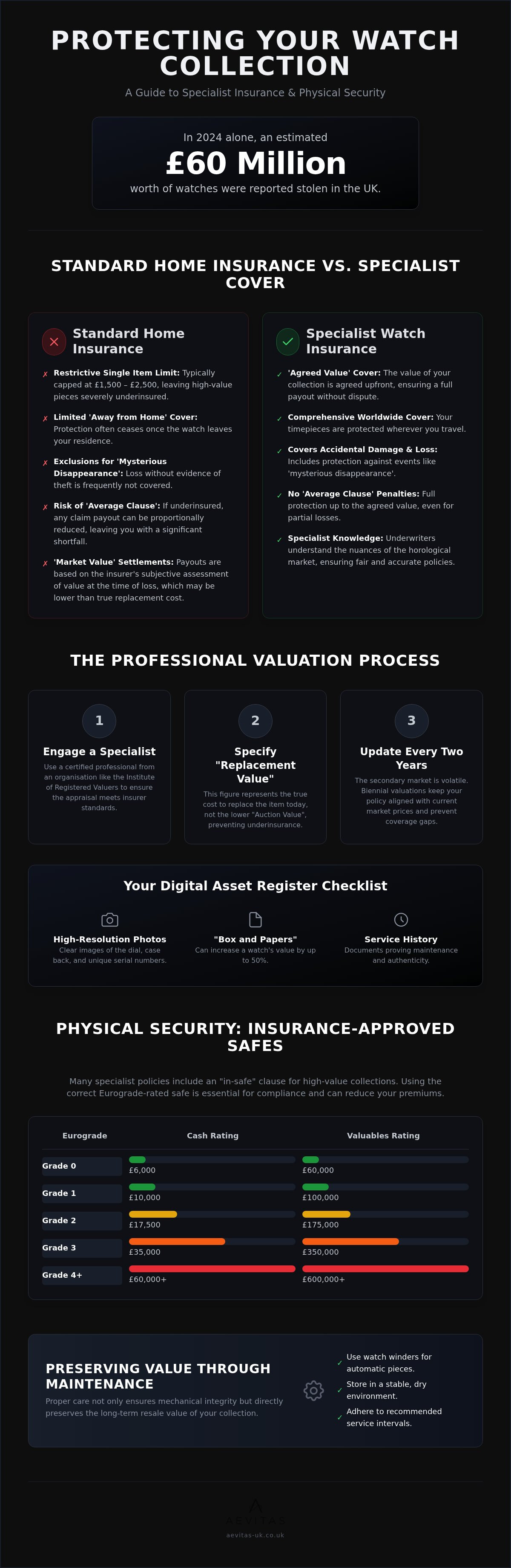
Generalist underwriters lack the technical expertise to distinguish between a standard production model and a rare vintage reference. They typically offer "Market Value" settlements, which can be subjective and often result in lower payouts. Specialist policies focus on "Agreed Value." This ensures that protecting the value of your watch collection
How to Accurately Value Your Watch Collection for Insurance Purposes
Establishing a precise figure for your horological assets requires more than a cursory glance at online auction results. In the current 2026 secondary market, prices for specific references can fluctuate by thousands of pounds in a single quarter. This volatility makes protecting the value of your watch collection a proactive task rather than a one-time administrative chore. Accurate valuation ensures that your premiums reflect the true replacement cost, preventing the heartbreak of a settled claim that falls short of the current market price.
When insuring high-value items, you must understand the nuances of the appraisal process. A professional valuation provides the legal evidence required to challenge a low settlement offer from an adjuster. Without this documentation, you are at the mercy of an insurer's internal data, which may not account for the rarity or condition of your specific pieces.
The Professional Appraisal Process
Enlisting a specialist is non-negotiable. Reputable UK organisations, such as the Institute of Registered Valuers, provide the level of detail insurers demand. It's vital to specify "Replacement Value" in these documents. This represents the cost to replace the item with a similar one in the event of loss. Conversely, "Auction Value" represents the expected hammer price at a sale; this is often significantly lower and leaves you under-insured. The industry gold standard is to update these valuations every two years to keep pace with market shifts.
Essential Documentation Checklist
A "Digital Asset Register" acts as your secondary line of defence. This should be an off-site, encrypted cloud folder containing everything needed to prove provenance. High-resolution photography is the cornerstone of this register. Capture the dial, the case back, and specifically the serial numbers or unique identifying marks. Physical accessories also carry immense weight. The presence of the original "Box and Papers" can increase a watch’s value by up to 50% compared to a "naked" watch. Storing these items in a premium watch box ensures they remain in pristine condition, ready for inspection or future sale. Ensure you also scan and upload original purchase receipts and every service record to document the watch's history and mechanical health.
The 2026 market often sees a wide gulf between Recommended Retail Price (RRP) and grey market prices. If a watch is unavailable at retail, your insurance must reflect the cost of sourcing it through a trusted secondary dealer. Discuss "Agreed Value" clauses with your broker to ensure the payout matches the actual cost of acquisition, not just the manufacturer's list price.
Selecting the Right Specialist Watch Insurance Policy in the UK
Once you've established an accurate valuation, the next step in protecting the value of your watch collection is securing a policy that understands horological nuances. Specialist insurers differ from high-street providers by offering bespoke terms that cater to the lifestyle of a collector. For example, whilst a standard policy might restrict cover to the borders of the United Kingdom, a specialist policy often provides "Worldwide Cover" as standard. This is vital for the frequent traveller. If your Patek Philippe is lost or stolen whilst you're abroad, a specialist policy ensures you aren't left stranded by geographic exclusions.
You must also pay close attention to "In-Safe" clauses. As your collection grows in value, underwriters often mandate that any watch not physically on your wrist must be stored in an insurance-approved safe. Failure to adhere to this can void a claim entirely. Similarly, the "Pairs and Sets" clause is a critical consideration for those who own matched sets or limited edition pairs. In the event that one watch is damaged or lost, this clause ensures the insurer compensates you for the loss in value of the remaining, now incomplete, set.
Financial management of your policy involves balancing deductibles and excesses. Whilst a higher excess can lower your annual premium, ensure it remains at a level you're comfortable paying out-of-pocket. With specialist premiums often starting around £109 for a 12-month term, the cost of expert cover is a small fraction of the asset's total value.
Key Policy Features to Demand
Demand "New for Old" replacement terms to ensure you receive a current equivalent model if your specific reference is no longer in production. Additionally, look for "Appreciation Cover." These policies automatically increase your coverage by 10% to 20% between professional valuations, providing a buffer against sudden market spikes. Transit cover is equally essential, protecting your timepieces whilst they are in the post to a service centre or manufacturer.
Navigating the Fine Print
Professional use exclusions are a common pitfall; if you're a part-time dealer or influencer, you must declare this to avoid claim rejection. Furthermore, many policies require proof of "Professional Servicing" every few years. Neglecting mechanical maintenance can be interpreted as a failure to take reasonable care of the asset. For many high-value portfolios, an insurance-approved Watch Winder Safe is often a prerequisite for obtaining the most competitive rates and comprehensive "Agreed Value" settlements.
Physical Security Measures: Reducing Risk and Insurance Premiums
Physical security is the front line of protecting the value of your watch collection. Insurers do not merely assess the items you own; they scrutinise the environment in which they are kept. A robust security profile, incorporating monitored alarms and CCTV, can lead to significant premium discounts. However, for a high-value horological portfolio, the most critical factor is often the safe. Standard home safes found in DIY stores are rarely sufficient. They lack the structural integrity required to resist professional tools and, more importantly, they lack the Eurograde ratings that underwriters demand.
Insurers typically apply a "ten times" rule to safe ratings. For instance, a Eurograde 0 safe with a £6,000 cash rating provides up to £60,000 in cover for jewellery and watches. If your collection's value exceeds this, you must move to a higher grade to remain fully indemnified. A Grade 1 safe increases this cover to £100,000, whilst a Grade 3 safe can protect assets up to £350,000. Failure to match your safe's rating to your collection's total value is a common cause of claim rejection. Beyond hardware, be mindful of "social media risk." Sharing images of your timepieces online can inadvertently signal your location to thieves, potentially compromising your "reasonable care" obligations under your policy.
Investing in a Watch Winder Safe
Traditional safes offer physical protection but often neglect the mechanical requirements of automatic movements. An insurance-approved watch winder safe provides a dual solution by combining high-level security with precision maintenance. These units ensure that lubricants remain fluid through consistent rotation, preventing the mechanical stagnation that can lead to costly service bills. Aevitas safes are engineered to meet stringent security standards, providing a secure environment that satisfies the most demanding UK underwriters whilst keeping your collection ready to wear.
Security Abroad: Travel Protection
Travel introduces a unique set of vulnerabilities. Hotel room safes are notoriously insecure and are often the weakest link in your security chain. When moving between locations, use leather watch rolls to keep your timepieces on your person or within your hand luggage. This ensures you maintain physical control of the assets at all times. Avoid using branded bags or original boxes during transit. Discreet, unbranded storage prevents you from signalling the presence of high-value items to opportunistic thieves in airports or hotel lobbies.
Ensure your physical defences match the calibre of your investment. Secure your portfolio with our range of insurance-approved watch winder safes to satisfy underwriting requirements and gain total peace of mind.
Long-term Maintenance: Preserving Mechanical Integrity and Resale Value
Financial indemnity is only one facet of protecting the value of your watch collection. Physical preservation of the movement and exterior is equally vital for long-term asset growth. When a watch enters the secondary market, its condition rating is the primary driver of price. A timepiece classified as being in "Excellent Condition" must not only look pristine but also perform within manufacturer specifications. According to industry data, watches with a complete, documented service history from authorised centres can command 20-50% more than identical models without such records. Regular servicing is a non-negotiable requirement for maintaining this premium status.
Mechanical health relies heavily on consistent movement. Lubricant stagnation is a silent value-killer for automatic watches that sit idle for long periods. When oils congeal, they create friction that can damage delicate components once the watch is finally wound. Utilising automatic watch winders keeps these lubricants fluid and ensures the movement remains ready for immediate use. Beyond the mechanics, environmental factors such as humidity and UV exposure can degrade dials and perish gaskets. Storing your timepieces in high-quality watch boxes provides a controlled environment that shields your investment from these external threats.
The Science of the Watch Winder
Precision is paramount when selecting a winder. Over-winding can lead to unnecessary mainspring strain, which is why Aevitas winders feature programmable Turns Per Day (TPD) settings. These allow you to match the winder's rotation to the specific requirements of your movement, ensuring perpetual calendars and moon phase complications stay perfectly accurate without risking mechanical fatigue. For those seeking modern aesthetics alongside expert performance, Carbon Fibre Watch Winders offer a sophisticated solution for high-performance collections.
Display and Presentation
Maintaining value also involves preventing the small, cumulative damages of daily wear. Placing your watch on a bedside table can lead to "desk diving" scratches on the clasp and bracelet. Using luxury watch stands for your daily-wear pieces provides a soft, elevated surface that keeps the metal away from abrasive furniture. This approach mirrors the transition from disorder to refinement, ensuring every piece in your portfolio is treated with the respect its craftsmanship deserves. Protect your collection with Aevitas UK today and ensure your horological legacy remains both secure and mechanically flawless.
Securing Your Horological Legacy
Achieving total peace of mind requires a shift from passive ownership to proactive stewardship. You now have the framework for protecting the value of your watch collection by addressing both financial and physical risks. By moving beyond the restrictive single item limits of standard home insurance and implementing a biennial valuation schedule, you ensure your assets are always fully indemnified. Physical security remains the cornerstone of this strategy; a Eurograde safe doesn't just deter theft, it actively lowers your insurance premiums whilst providing the ultimate defence for your investment.
As the UK's best-selling premium brand, Aevitas UK provides the essential infrastructure for this level of care. Our products are compatible with the world's most prestigious marques, including Rolex and Patek Philippe, ensuring your movements remain as precise as the day they were crafted. Secure your collection with Aevitas UK’s insurance-approved safes and winders and benefit from free insured delivery worldwide. Take control of your investment today and enjoy the calm that comes with professional-grade protection and refined organisation.
Frequently Asked Questions
Is my luxury watch covered by standard UK home insurance?
Standard home insurance rarely provides sufficient cover for high-value timepieces. Most general policies include a "single item limit" that caps payouts for individual items at between £1,500 and £2,500. If your watch exceeds this value, it must be specifically declared to the insurer. Even then, home policies often lack essential features like "Agreed Value" settlements or accidental damage protection whilst you're away from the property.
How often should I get my watch collection valued for insurance?
You should obtain a professional appraisal every two years to keep pace with the volatile secondary market. This biennial schedule is considered the industry gold standard for protecting the value of your watch collection. Frequent valuations ensure your "Agreed Value" remains accurate, preventing a situation where your insurance payout is significantly lower than the current cost of replacing the piece through a reputable dealer.
Does a watch winder safe actually lower my insurance premiums?
Installing an insurance-approved safe often leads to lower premiums by significantly reducing the underwriter's risk. Insurers favour Eurograde-rated safes because they provide a verified level of resistance against theft. When you store your collection in a high-security environment, you demonstrate "reasonable care." This proactive approach to security makes you a more attractive prospect for specialist insurers, who may offer more competitive rates as a result.
What is a "Single Item Limit" and how does it affect my watches?
A single item limit is the maximum amount an insurer will pay for any one undeclared item in your home. In 2026, most UK home policies set this limit at £2,500. If you own a watch worth £10,000 but haven't listed it separately on your schedule, the insurer is only obligated to pay the £2,500 cap in the event of a total loss. This leaves you with a substantial financial shortfall.
Do I need specialist watch insurance if I only own one expensive piece?
Specialist insurance is highly beneficial even for a single high-value watch. General home policies often exclude specific risks like mechanical breakdown or "mysterious disappearance." A specialist policy provides tailored protection, including worldwide transit cover and the guarantee of a like-for-like replacement. It's an essential investment for anyone seeking the peace of mind that their asset is fully indemnified against a broad range of risks.
What happens if I lose my watch while travelling abroad?
Your ability to claim depends on whether your policy includes "Worldwide Cover." Many standard UK home policies only protect your belongings whilst they are physically inside your residence. Specialist insurers usually provide 365-day worldwide protection as standard. To ensure a successful claim, you must often prove the watch was either on your person or secured in a luxury watch roll within your hand luggage during transit.
Is it better to insure watches separately or as part of a jewellery policy?
Standalone watch insurance is typically superior because it accounts for horological nuances that general jewellery policies might overlook. These specialist contracts often include clauses for mechanical integrity and "Pairs and Sets" protection. They also utilise adjusters who understand protecting the value of your watch collection through authorised service centres, ensuring that repairs are carried out to manufacturer standards rather than by a general high-street jeweller.
Will my insurance be void if I don’t keep my watches in a safe?
Your cover may be void if your policy contains an "In-Safe" clause that you've failed to follow. Underwriters often mandate that any watch not being worn must be stored in a safe with an appropriate Eurograde cash rating. If a theft occurs and the watches were left on a dressing table or in a standard drawer, the insurer can legally reject the claim based on a breach of policy conditions.
0 comments